
School-Based Case Study:
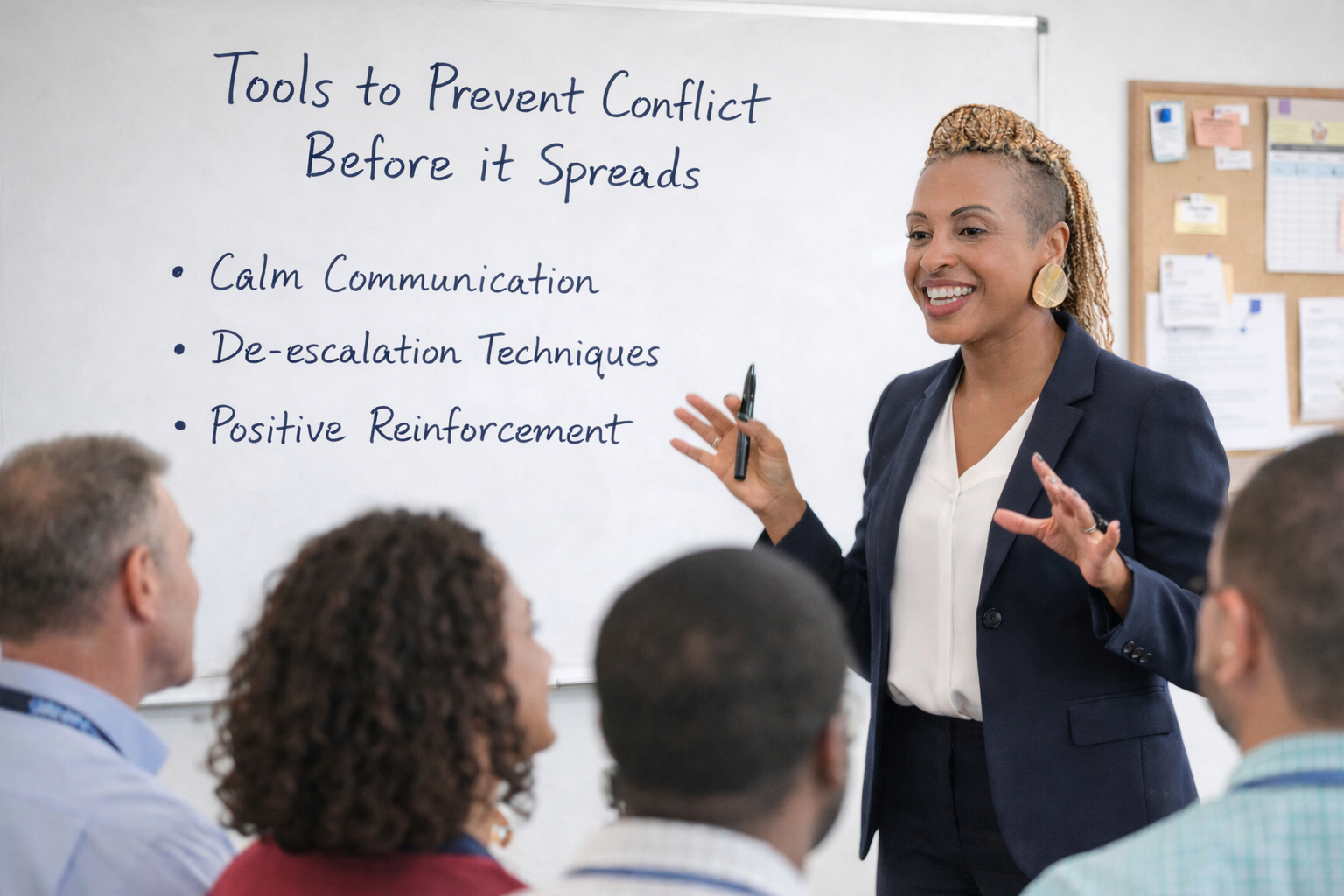
A school-based strategy for prevention, de-escalation, accountability, and belonging
Context
School leaders were facing persistent challenges with student behavior—conflict between students, repeated disruptions, strained adult-student relationships, and a growing sense that “traditional” approaches weren’t building the trust or skills students needed to make lasting changes. Staff wanted practical tools to respond in the moment and a stronger school culture that reduced incidents over time.
What We Did
Restorative Practices Training + Coaching included:
- Trained staff in practical tools to prevent conflict before it spreads.
- Built shared language and techniques for de-escalation—reducing power struggles and increasing emotional regulation.
- Implemented restorative circles, community meetings, and team-building exercises to strengthen peer relationships and adult-student connections.
- Established consistent routines that created a sense of psychological safety: students knew they had space to be heard and guided back to the community.
- Strengthened accountability by teaching staff how to guide students to take ownership of actions and recognize impact on others.
- Used restorative conversations and reflection protocols to support behavior change, not just consequence compliance.
- Supported staff in using dialogue to identify the underlying needs driving behaviors (stress, unmet needs, conflict patterns, skill gaps).
- Build student capacity for empathy and perspective-taking—fostering compassion and mutual respect across conflicts.
Outcomes and Impact (What Improved)
This approach supported shifts in both culture and behavior by:
- Increasing staff confidence in preventing and de-escalating conflict
- Creating stronger peer-to-peer and student-to-adult relationships
- Building a shared schoolwide approach to conflict and harm
- Strengthening accountability in a way that preserved dignity and reinforced belonging
- Reducing repeated patterns by addressing root causes, not only symptoms
- Reduction in major and minor referrals to include classroom removals
Why It Worked
Restorative Practices worked because it treated behavior as both a skills and relationship issue—not simply a compliance issue. Students were more willing to follow expectations when they trusted the adults enforcing them, and staff were more effective because they had consistent tools, structures, and language.
What This Demonstrates About My Work — Through the C.A.R.E.E. Framework
This case reflects how I apply the C.A.R.E.E. Framework to transform school culture through restorative practices:
- C — Culture of Consciousness: We built shared awareness of how daily interactions, adult responses, and school norms shape behavior and climate—so staff could respond with intention, not impulse.
- A — Acceptance (Belonging): We created consistent opportunities for students to feel seen and connected through restorative circles and community-building—because belonging increases cooperation and reduces conflict.
- R — Results Orientation: We established clear routines and response protocols that strengthened consistency, reduced escalation, and supported measurable improvements in behavior and climate.
- E — Engagement: We equipped adults with practical, in-the-moment tools for prevention and de-escalation, increasing participation in a shared approach across classrooms and common spaces.
- E — Empowerment: We strengthened accountability by helping students take ownership, repair harm, and build skills—so responsibility became developmental and durable, not just punitive.
Bottom line: C.A.R.E.E. helps schools bridge belonging to behavior outcomes—so expectations hold, relationships strengthen, and culture improves over time.